
When choosing between inpatient, outpatient and holistic rehab in the UK, the key factors are addiction severity, whether a medical detox is required, home environment, and Care Quality Commission (CQC) registration of the treatment centre. Inpatient rehab involves living at a residential facility for typically 28 to 90 days with 24-hour clinical support, while outpatient rehab allows a person to attend structured sessions several times per week from home. Holistic therapies such as mindfulness, yoga, and art therapy are used alongside clinical treatment as complementary supports, not as standalone replacements for evidence-based care.
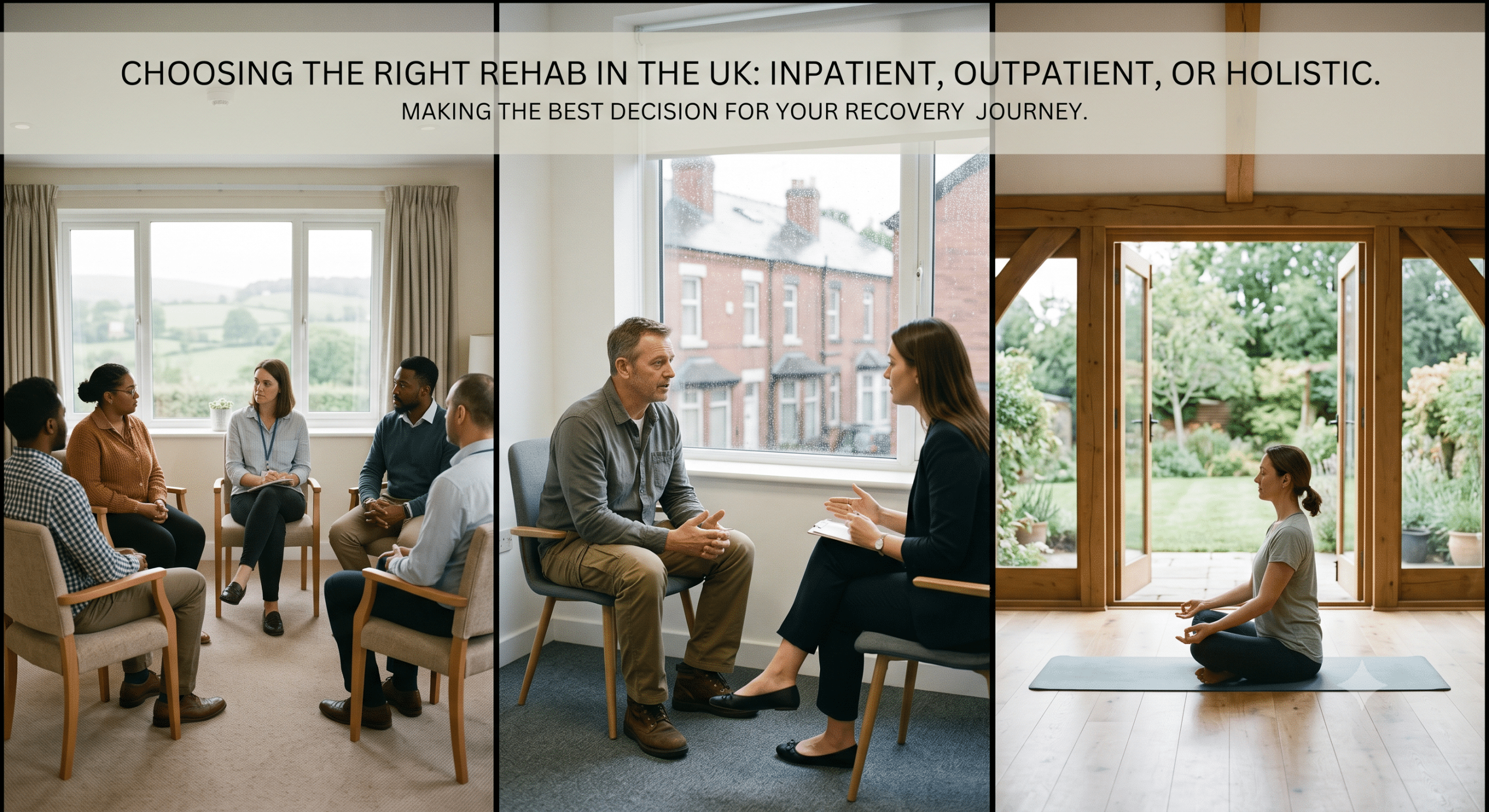
Choosing the right rehab option depends on several practical and clinical factors, and understanding the differences between each type is the clearest starting point. Inpatient rehab is a residential programme where you live at the treatment centre, typically for 28 to 90 days, receiving 24-hour clinical and therapeutic support in a structured, trigger-free environment. Outpatient rehab allows you to continue living at home while attending scheduled treatment sessions, commonly three to five days per week in an intensive outpatient programme (IOP). Holistic therapies such as mindfulness, yoga, art therapy, and acupuncture are complementary approaches used alongside clinical treatment to support whole-person recovery; they are not a standalone substitute for evidence-based care.
The most important consideration is the severity of your addiction. If you are physically dependent on alcohol or certain substances, a medically supervised detox will likely be required before any programme begins, and inpatient settings are generally better equipped to manage this safely. Inpatient rehab is also typically recommended where there are co-occurring mental health conditions, an unstable home environment, or a history of relapse. Outpatient rehab may suit those with milder dependency, strong social support at home, and work or family commitments that make residential treatment impractical.
Regulation is a non-negotiable factor when evaluating any private rehab centre in England. All residential rehab facilities must be registered with the Care Quality Commission (CQC); checking a centre’s CQC status before committing to a programme is a straightforward and essential verification step. Private inpatient programmes in the UK vary considerably in cost depending on the facility and duration, so it is worth discussing funding options, including whether NHS-funded treatment via local drug and alcohol services (LDAS) may be available to you, though waiting times vary by local authority.
Rehab Helper UK is a free, confidential advisory and referral service that helps you navigate these decisions without pressure. By assessing your individual circumstances, Rehab Helper UK can match you to a regulated private clinic that fits your clinical needs, location, and personal situation in 2026. Please note that Rehab Helper UK connects patients with private clinics and does not provide direct medical treatment. If you are ready to explore your options, a 100% free and confidential assessment is the recommended first step towards a personalised treatment plan and lasting recovery.